
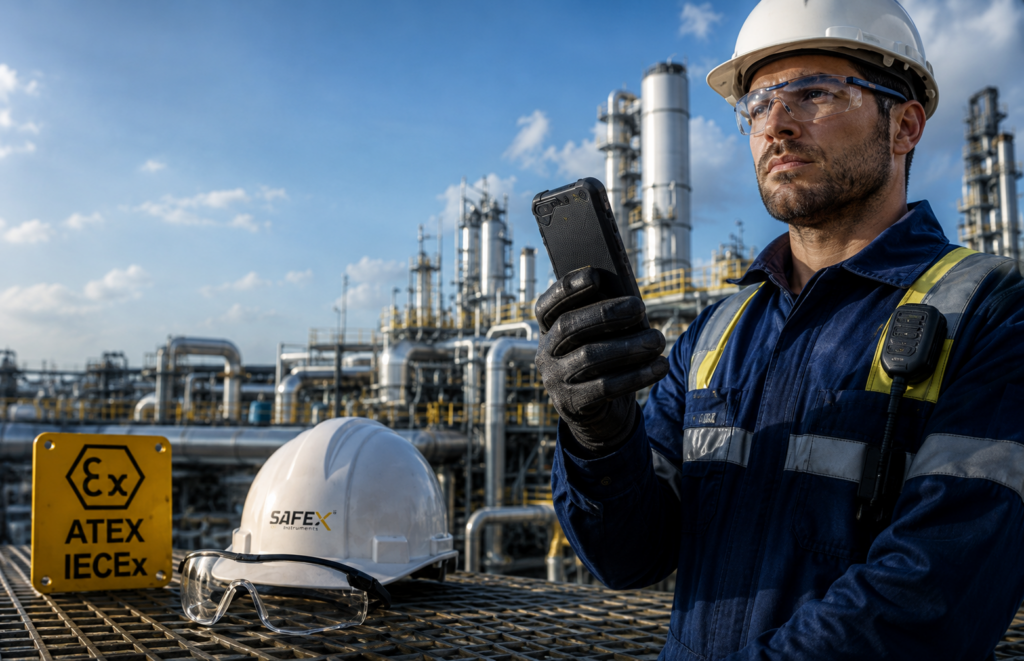
In industries such as oil and gas, mining, chemical processing, manufacturing, and utilities, communication is more than a convenience. It is a critical part of workplace safety. Teams working in hazardous areas need reliable mobile communication, but ordinary mobile phones are not designed for environments where explosive gases, vapours, or dust may be present.
This is where intrinsically safe mobile phones become essential. These devices are designed and certified for use in hazardous areas, helping workers stay connected while reducing the risk of ignition in potentially explosive atmospheres.
Safex Instruments provides ATEX and IECEx certified intrinsically safe mobile phones built for hazardous industrial environments, including oil & gas, mining, chemical, and industrial work zones.
What Is an Intrinsically Safe Mobile Phone?
An intrinsically safe mobile phone is a specially designed communication device that limits electrical and thermal energy so it cannot create sparks or heat levels capable of igniting a hazardous atmosphere.
In simple terms, it is built for areas where a normal mobile phone could become a safety risk.
These phones are commonly used in:
Oil and gas facilities
Refineries
Offshore platforms
Chemical plants
Mining sites
Manufacturing facilities
Power and utility environments
Hazardous storage areas
Unlike regular smartphones, intrinsically safe phones are tested and certified to meet strict safety standards for explosive atmospheres.
Why Ordinary Mobile Phones Are Not Safe in Hazardous Areas
A standard mobile phone may look harmless, but it contains components that can create potential ignition risks. Batteries, circuits, charging ports, speakers, and internal electronics may generate heat or sparks under certain conditions.
In a normal environment, this may not be a serious issue. But in hazardous areas where flammable gases or combustible dust may be present, even a small ignition source can lead to a major accident.
That is why industries with classified hazardous zones require certified devices such as ATEX mobile phones and IECEx mobile phones.
Understanding Hazardous Area Zones
Hazardous areas are classified based on the frequency and duration of explosive atmospheres. Safex explains that ATEX zones help determine the level of risk and the type of equipment required for each area. Zone 1 is considered a high-risk area where an explosive atmosphere is likely to occur during normal operation, while dust areas also have classifications such as Zone 20, Zone 21, and Zone 22.
For companies operating in Zone 1/21 environments, using properly certified mobile devices is not just a technical decision. It is a safety requirement.
The Importance of ATEX and IECEx Certification
ATEX and IECEx certifications help ensure that equipment used in hazardous areas meets strict safety standards.
ATEX certification is widely used for equipment in explosive atmospheres within European markets.
IECEx certification is an international certification system for equipment used in explosive atmospheres. The IECEx system is focused on certification to standards relating to equipment for use in explosive atmospheres.
For global industries, having both ATEX and IECEx certified communication devices provides greater confidence, compliance support, and operational safety.
Key Benefits of Intrinsically Safe Mobile Phones
1. Safer Communication in Risk Zones
The biggest benefit of an intrinsically safe phone is safety. Workers can communicate, report issues, receive instructions, and respond to emergencies without using unsafe devices in hazardous environments.
2. Improved Emergency Response
In high-risk industries, fast communication can save lives. Features such as SOS buttons, loud speakers, GPS/location support, and clear voice communication help teams respond quickly during emergencies.
3. Better Productivity for Field Teams
Modern intrinsically safe devices are not just basic communication tools. Many now support Android operating systems, Wi-Fi, LTE, Bluetooth, NFC, GPS, and workplace applications. This helps workers manage inspections, checklists, reports, maintenance updates, and team coordination from the field.
4. Rugged Performance in Harsh Conditions
Hazardous environments are often physically demanding. Devices may be exposed to dust, water, heat, vibration, and outdoor conditions. A good intrinsically safe mobile phone should offer rugged protection such as IP68 water and dust resistance, strong battery life, glove touch support, and durable construction.
5. Compliance Support for Industrial Operations
Using certified devices helps companies align with safety requirements and reduce risks during audits, inspections, and operational reviews. It also supports a stronger safety culture across the organisation.
Ex Mobile 20: Built for Hazardous Industrial Communication
The Ex Mobile 20 from Safex Instruments is designed as an intrinsically safe feature phone for Zone 1/21 hazardous environments. It runs on Android 14 and is certified to ATEX and IECEx standards for Zone 1/21 use.
Key highlights include:
Android 14 operating system
4G LTE connectivity
4000mAh battery
IP68 water resistance
Glove touch support
AI noise cancellation
Dedicated SOS button
Dual Nano SIM support
USB-C and magnetic charging options
This makes the device suitable for teams working in oil & gas, mining, chemical plants, manufacturing, utilities, and other industrial environments where safe communication is critical.
How to Choose the Right Intrinsically Safe Mobile Phone
Before selecting a hazardous area mobile phone, companies should check:
Certification requirements for the worksite
Zone classification of the operating area
Battery life and charging method
Network and SIM compatibility
Operating temperature range
Water and dust protection rating
Emergency features such as SOS support
Application and operating system requirements
After-sales support and warranty availability
Choosing the right device helps protect workers while improving communication and operational efficiency.