
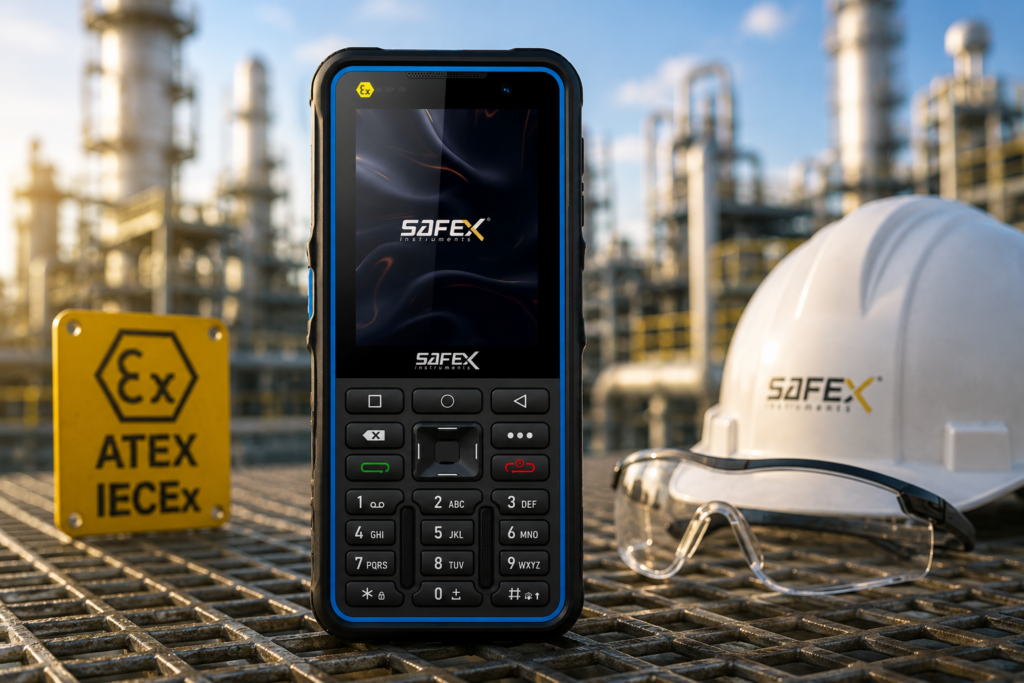
What Is an Intrinsically Safe Mobile Phone?
Mobile communication has become essential across modern industrial workplaces. Engineers use smartphones to access technical documents, maintenance teams record inspections digitally, and supervisors rely on mobile communication to coordinate work across large facilities.
However, a standard consumer smartphone may not be suitable for every working environment.
In locations where flammable gases, vapours or combustible dust may be present, an ordinary mobile device can introduce potential ignition risks. These environments require equipment that has been specifically designed, tested and certified for hazardous-area use.
This is where an intrinsically safe mobile phone becomes important.
What Is an Intrinsically Safe Mobile Phone?
An intrinsically safe mobile phone is a communication device engineered to operate in designated hazardous areas without releasing enough electrical or thermal energy to ignite the surrounding explosive atmosphere.
Intrinsic safety is a recognised protection method covered within the IEC 60079 series of standards. IEC 60079-11 specifically addresses equipment protection through intrinsic safety, commonly identified by the protection symbol “i.”
Unlike a normal smartphone placed inside a rugged-looking cover, a properly certified intrinsically safe phone is assessed as a complete product. Its battery, electronic circuits, enclosure, display and other components must work together without creating an unacceptable ignition source under the conditions covered by its certification.
These devices are commonly used in:
- Oil and gas facilities
- Petrochemical plants
- Refineries
- Chemical manufacturing sites
- Offshore platforms
- Mining operations
- Pharmaceutical facilities
- Fuel storage terminals
- Utilities and energy facilities
- Locations containing combustible dust
The purpose is not simply to make the phone stronger. It is to make the device suitable for a specific classified environment.
Why Can a Regular Smartphone Be Unsafe in a Hazardous Area?
A normal smartphone contains a battery, electronic circuits, charging components and other parts that may generate heat or electrical energy during operation.
Under normal household or office conditions, this is not usually a concern. In a hazardous area, however, the surrounding atmosphere may contain a concentration of flammable gas, vapour or dust capable of ignition.
Potential risks can include:
- Electrical sparks caused by damaged components
- Excessive surface temperatures
- Battery faults or short circuits
- Static electricity from unsuitable enclosure materials
- Damage caused by impact, water or dust
- Unapproved charging or accessory connections
A phone does not need to produce a visible flame to become a potential ignition source. A small spark or sufficiently hot surface may be enough under certain atmospheric conditions.
For this reason, site operators should not assume that a waterproof, rugged or military-grade smartphone is automatically safe for use in an explosive atmosphere.
How Does an Intrinsically Safe Phone Work?
Intrinsic safety is based on controlling the electrical and thermal energy available within the equipment.
The phone is designed so that its circuits cannot release enough energy to ignite the specific gas or dust atmosphere covered by its approval, including under defined fault conditions.
This may involve:
Controlled electrical energy
The device limits voltage, current and stored electrical energy within its internal circuits.
Carefully designed battery systems
The battery is assessed for conditions such as short circuits, overheating and component failure. Replacing the approved battery with an unauthorised alternative may invalidate the protection provided by the certified design.
Temperature management
The phone must remain within the permitted surface-temperature limits stated in its certification and equipment marking.
Suitable enclosure materials
The housing must provide the required mechanical protection while also addressing risks such as electrostatic charging.
Component-level engineering
Intrinsic safety cannot normally be added as a simple software feature. It requires careful electrical design, approved components, controlled manufacturing and independent conformity assessment.
A genuine intrinsically safe smartphone is therefore a specialist industrial product rather than a standard phone with additional protective casing.
What Do ATEX and IECEx Mean?
When choosing a hazardous-area mobile phone, two of the most recognised certification frameworks are ATEX and IECEx.
ATEX certification
ATEX Directive 2014/34/EU covers equipment and protective systems intended for use in potentially explosive atmospheres within the European Union. It establishes essential health and safety requirements as well as conformity-assessment procedures that apply before covered products are placed on the EU market.
An ATEX-certified mobile phone should display equipment markings indicating the environments and protection levels for which it has been assessed.
IECEx certification
IECEx is the International Electrotechnical Commission’s certification system for equipment and services used in explosive atmospheres. It provides independent testing and certification against recognised international standards, helping manufacturers, regulators and industrial users assess equipment intended for hazardous areas.
Learn more about hazardous-area equipment certification through the official IECEx frequently asked questions page.
Understanding Hazardous-Area Zones
Hazardous areas are classified according to how frequently and for how long an explosive atmosphere is expected to be present.
For gases and vapours, common classifications include:
- Zone 0: An explosive gas atmosphere is present continuously, for long periods or frequently.
- Zone 1: An explosive gas atmosphere is likely to occur occasionally during normal operation.
- Zone 2: An explosive gas atmosphere is unlikely during normal operation and, if it occurs, is expected to exist only briefly.
Combustible-dust environments use Zones 20, 21 and 22 under a related classification approach.
A phone approved for one zone should not automatically be used in another. The certification must match the site classification, gas or dust group, temperature requirements, equipment protection level and any special conditions stated in the certificate.
IECEx identifies hazardous or “Ex” areas as locations where flammable liquids, gases, vapours, combustible dusts or fibres may occur in quantities capable of creating a fire or explosion risk.
Is an Intrinsically Safe Phone the Same as a Rugged Phone?
No. Intrinsic safety and ruggedness address different risks.
A rugged industrial smartphone may offer:
- Water resistance
- Dust protection
- Reinforced construction
- Drop resistance
- A durable display
- Operation in difficult temperatures
These features are valuable in demanding workplaces, but they do not by themselves demonstrate suitability for an explosive atmosphere.
An IP68 rating, for example, relates to protection against dust and water ingress. It does not replace ATEX or IECEx certification.
Similarly, drop-test or military-standard claims do not prove that a device limits electrical and thermal energy sufficiently for a classified hazardous area.
The most appropriate industrial phone may need both qualities: hazardous-area certification and strong physical durability.
What Features Should an Industrial User Look For?
Safety certification should come first, but usability also matters. A phone that is difficult to use may slow communication or discourage proper adoption by field teams.
Useful features may include:
Clear hazardous-area certification
Confirm the applicable ATEX or IECEx certification, zone approval, gas or dust group, temperature class and equipment protection level.
Readable display
The screen should remain clear in bright outdoor conditions and industrial lighting.
Glove-friendly operation
Workers may need to operate the device without removing protective gloves.
Reliable connectivity
Depending on the site, useful options may include 4G LTE, Wi-Fi, Bluetooth, NFC and location services.
Suitable battery performance
The device should support the required shift duration while following all certified charging and battery-handling instructions.
Durable construction
Water, dust, vibration and impact resistance help the phone withstand demanding industrial use.
Modern operating system
An up-to-date operating system can support business applications, security controls, inspection software and workforce-management tools.
Push-to-talk capability
Push-to-talk functionality can provide faster communication between teams, depending on the device, network and software configuration.
Where Are Intrinsically Safe Smartphones Used?
Intrinsically safe phones support more than voice calls. They can become part of a wider digital workflow.
Oil and gas
Field personnel can communicate, access work orders, review procedures and document inspections in refineries, terminals and production facilities.
Chemical manufacturing
Teams can record maintenance activity and communicate across areas where flammable materials may be processed or stored.
Offshore operations
A certified industrial smartphone can help personnel maintain communication while working in physically demanding and tightly controlled environments.
Pharmaceutical production
Certain production processes may involve solvents, powders or other materials requiring hazardous-area controls.
Mining
Mining locations may contain combustible gases or dust, making correct equipment selection essential.
Inspection and maintenance
Technicians can capture approved field data, complete checklists, access equipment records and report faults without returning repeatedly to a control room.
How to Choose the Right Intrinsically Safe Mobile Phone
Start with the hazardous-area assessment rather than the phone’s commercial features.
Before purchasing, confirm:
- The hazardous-area zone in which the phone will be used.
- Whether the risk involves gas, vapour, mist, combustible dust or a combination.
- The required equipment group and category.
- The relevant gas or dust group.
- The required temperature class or maximum surface temperature.
- The equipment protection level.
- Any special conditions listed on the certificate.
- Local regulations and the organisation’s internal safety rules.
- Connectivity, software and device-management requirements.
- Approved batteries, chargers and accessories.
The certification marking and certificate schedule should be reviewed by a competent hazardous-area professional. Product names such as “explosion-proof,” “industrial” or “rugged” should never be treated as substitutes for documented approval.
Introducing the Safex EX Mobile 20
Safex Instruments offers the EX Mobile 20, an intrinsically safe smartphone developed for industrial communication in Zone 1/21 hazardous areas.
According to the Safex Instruments product information, the device combines Android functionality with ATEX and IECEx certification. Published features include Android 14, 4G LTE connectivity, a 4000mAh battery and IP68 ingress protection.
The EX Mobile 20 is intended to help industrial teams communicate and access digital tools while working in environments where ordinary consumer smartphones may not be appropriate.
Device selection should always be based on the complete certification, the site’s hazardous-area classification and the organisation’s safety assessment.
Responsible Use Remains Essential
Certification does not remove the need for safe working practices.
Users should follow the manufacturer’s instructions and site procedures, including requirements related to:
- Charging locations
- Approved accessories
- Battery replacement
- Inspection before use
- Damaged equipment
- Cleaning methods
- Software and configuration controls
- Storage and transportation
A cracked enclosure, unauthorised repair or incompatible accessory may affect the device’s certified protection. Damaged equipment should be removed from service and assessed according to the manufacturer’s guidance and the organisation’s safety procedures.
Conclusion
An intrinsically safe mobile phone is designed for more than physical toughness. It controls electrical and thermal energy so that the device can be used within the hazardous-area conditions covered by its certification.
For organisations operating in oil and gas, petrochemical, chemical, mining, pharmaceutical and other high-risk industries, the right certified smartphone can support safer communication, faster reporting and more connected field operations.
The most important step is choosing a device whose ATEX or IECEx approval matches the actual workplace classification.
Looking for a certified industrial communication solution? Explore the Safex EX Mobile 20 or contact Safex Instruments to discuss your hazardous-area mobile requirements.